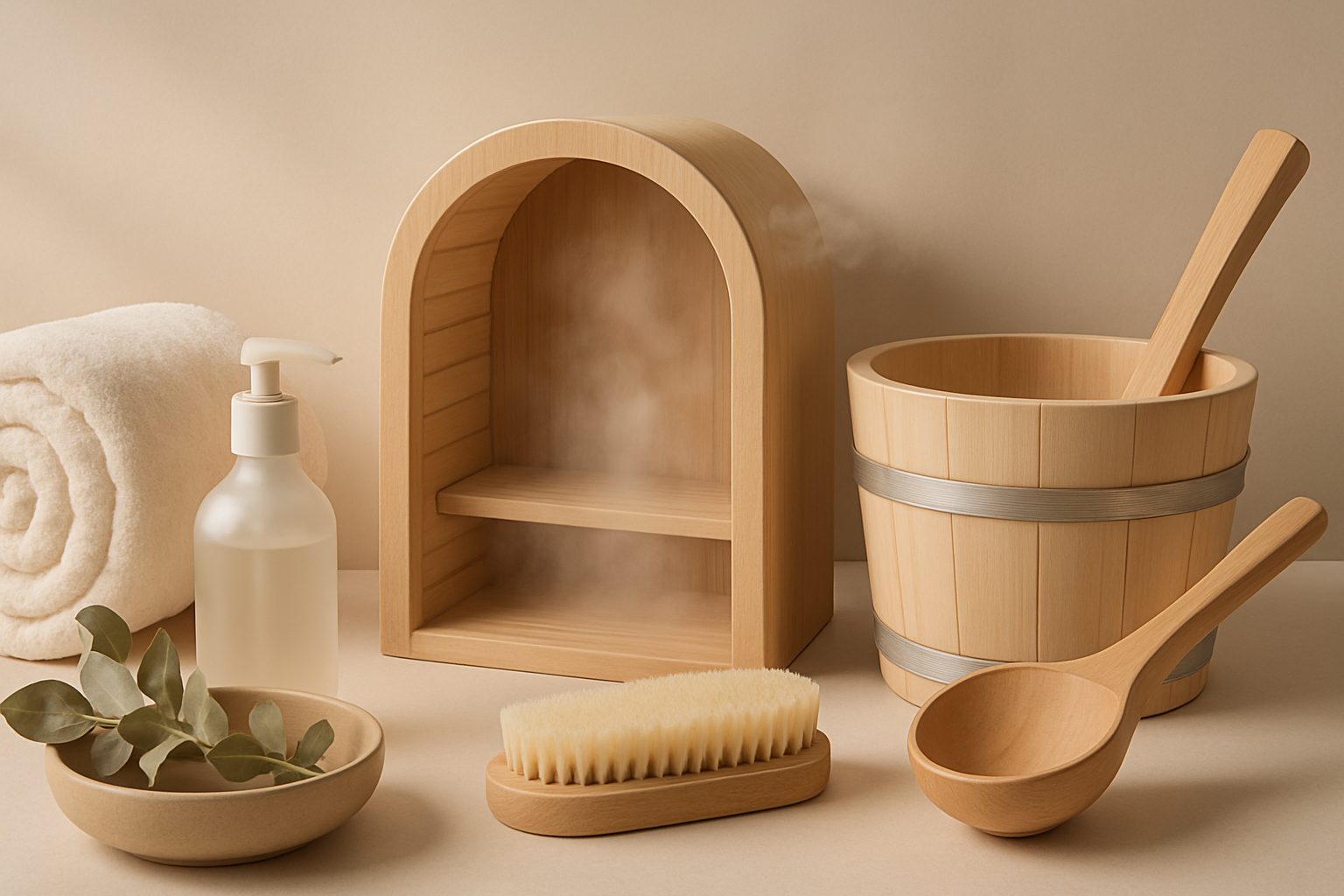
How to Build a Home Steam Room in the UK: Step-by-Step Guide
Building a home steam room transforms how you experience relaxation and wellness. Unlike traditional saunas, steam rooms operate at lower temperatures (around 40–50°C) with high humidity, making them gentler on the body and easier to maintain in a domestic setting. If you have a spare bathroom or basement corner, creating one is achievable with proper planning and the right materials.
Choose Your Space
Start by identifying a suitable location. Steam rooms work best in small, enclosed spaces—typically 1m² to 3m² is ideal for residential use. A corner of an existing shower, a converted utility room, or even a partition within a bathroom works well.
Check your ventilation access first. You'll need ducting that can route steam outside; blocked ventilation leads to damp walls and mould. If your chosen space has poor external access, you may need to extend ducting, which complicates installation.
Ensure the space has adequate headroom (at least 1.8m) and enough clearance for a small bench if you want one. Cramped steam rooms are uncomfortable and harder to clean.
Waterproofing: The Foundation
Waterproofing is non-negotiable. Moisture will penetrate poor waterproofing, causing timber rot, plaster degradation, and mould spread into surrounding areas. This is where most DIY steam rooms fail.
Use a dedicated steam-room waterproofing system rather than standard tile membranes:
Membrane application: Apply a liquid waterproof membrane (or sheet membrane) to all walls and the floor, extending 300mm beyond your steam room boundary. Pay particular attention to corners and seams—these are where leaks develop.
Barrier approach: Consider combining a membrane with a vapour barrier on the outer walls. This prevents moisture from entering timber framing behind tiles.
Floor base: The floor must slope slightly (around 1:100 gradient) towards a drainage point or sump. Water will condense and collect; without proper drainage, it sits and breeds problems.
Apply membrane before tiling, and ensure it's fully cured (usually 48 hours) before proceeding.
Tile Selection and Installation
Choose tiles designed for high-moisture environments. Large-format tiles (600mm×300mm or larger) minimise grout lines, reducing potential leak points. Porcelain is more water-resistant than ceramic, but ceramic works fine if sealed properly.
Grout matters: Use epoxy grout, not standard cement-based grout. Epoxy is waterproof and resists mould far better. It's messier to work with and costs more, but failures are expensive.
Apply tiles over your waterproof membrane using a flexible, waterproof adhesive designed for steam applications. Standard tile adhesive doesn't grip as reliably over membranes.
Seal all grout lines after installation with a hydrophobic grout sealer. Reapply annually—this is maintenance, not optional.
Ventilation Systems
Ventilation removes excess humidity and prevents condensation damage to the building structure. Undersized extraction leads to persistent dampness; oversized extraction cools the steam room too quickly, making it uncomfortable.
Calculate your needs: A typical home steam room requires extraction of 10–15 air changes per hour. For a 2m×2m×2.2m space, that's roughly 88–132 cubic metres per hour (m³/h). An extraction fan rated for 100–150 m³/h is appropriate.
Choose an inline extractor fan over a standard through-wall model. Inline fans are quieter and more powerful, and they ducting externally prevents warm, moist air escaping into the loft.
Install dampers on the ductwork to prevent back-draught when the steam room isn't in use. Some systems include humidity-triggered fans that activate automatically when moisture levels rise.
Ventilation should run for 20–30 minutes after each use to fully dry the space.
Steam Generator: Sizing and Placement
Steam generators are the heart of your steam room. They come in two types: electric and gas. Electric generators are standard for residential installations.
Generator size: Generators are rated by kilowatts (kW), which roughly translates to output capacity. For a small home steam room (2m³–3m³), a 4–6 kW generator is sufficient. Oversizing wastes energy; undersizing won't reach temperature properly.
Placement: Install the generator outside the steam room itself—in an adjacent cupboard or utility space. This keeps the generator cooler and reduces steam entry into the machine, extending its life.
Water supply: Generators need a cold water feed. If your mains water is hard (which most UK water is), consider a water softener for the feed line. Limescale buildup inside generators requires regular descaling; soft water extends servicing intervals.
Controls and Safety
Install a digital timer and thermostat in the steam room entrance. These should be waterproof and easily accessible without entering the steam.
Temperature control: Set a maximum temperature of 50°C. Steam rooms above this become uncomfortable and increase the risk of scalding. A thermostat prevents the generator running indefinitely.
Emergency shut-off: Include a clear, red emergency stop button outside the steam room door, accessible without entering the space.
Glass doors: If using glass (tempered only), ensure it's not sealed permanently. A small gap or ventilation hole prevents pressure buildup and allows steam to escape.
Final Steps
Test your waterproofing before installing the generator. Run water over all seams and check for leaks from underneath. Small weeping now saves costly remediation later.
Prime the steam room with a few short cycles to check operation, temperature distribution, and ventilation performance before regular use.
Plan for maintenance: descale the generator every 6–12 months depending on water hardness, and reapply grout sealer annually. A well-maintained steam room runs reliably for 10+ years.
Building a home steam room takes time and precision, particularly the waterproofing stage. Rushing this phase is the primary cause of failure. With proper construction, you'll enjoy a durable, functional space that adds real value to your home.
More options
- Home Steam Room Cabins & Enclosures (Amazon UK)
- Steam Generators for Home Use (Amazon UK)
- Portable Personal Steam Rooms & Tents (Amazon UK)
- Steam Shower Enclosures (Amazon UK)
- Steam Room Accessories (Diffusers, Lighting, Benches) (Amazon UK)